Spirituality is one of those words that get used often, but not always explained clearly. Some people hear the word and immediately think of religion, church, prayer, or scripture. Others think of meditation, crystals, energy, rituals, nature, acestors, intuition, or simply trying to become a better version of themselves. The truth is, spirituality can look different for every person, because at its core, it is deeply personal. It is not always about following one specific path. Sometimes it is about finding the thread that helps you feel connected, grounded, hopeful, and alive again.
For me, soritiaulity became more than a belief system or a practice I was curious about. It became something that helped save me. It helped me through depression, and it helped me through my addiction to alcohol. It gave me something to hold onto when I felt disconnected from myself, from life, and from any sense of purpose. Spirituality did not fix everything overnight, and it did not mean I never needed support, healing, or hard inner work. But it gave me a reason to keep reaching for myself when I did not know how to. It’s reminded me that I was still here, still worthy, and still capable of becoming someone I could be proud of.
That is why I believe spirituality matters so much. It can meet people in the middle of grief, addiction, loneliness, confusion, heartbreak, or change and gently remind them that their story is not over. It can show up through prayer, ritual, nature, meditation, religion, witchcraft, recovery, stillness, or a quiet conversation with the Divine. It does not always need to look a certain way to be real. What matters is whether it brings you closer to healing, closer to love, and closer to the truth of who you are.
I also think this is where many people begin to confuse spirituality with religion. Religion can absolutely be spiritual, and for many people, it is a beautiful source of comfort, tradition, and community. But spirituality and religion are not always the same thing. Religion often gives people a structured path to follow, while spirituality is the personal releationship we build with meaning, connection, purpose, and the sacred. You can be religious and spiritual. You can be spiritual without belonging to a religion. You can also belong to a religion and still feel disconnected from the heart of it.
One of the saddest things I have noticed is how often sacred paths become tangled in the need to be “right.” So many religions and spiritual traditions speak about love, compassion, humility, forgiveness, and connection, yet people still argue over whose path is correct and whose path is wrong. To me, that is where the human ego steps into something that was meant to be holy. A path should not make us cruel or superior. It should soften us, humble us, and help us remember that the sacred is far too vast to belong to only one group of people.
This article is not about proving one belief system over another. It is about understanding what spirituality really is, how it differs from religion, why it matters, and how it can become a lifeline for people in ways we may never fully see from the outside. Spirituality can save through many different doors. It can save through prayer, ritual, sobriety, nature, community, devotion, shadow work, or the quiet decisions to keep going. What matter most is not the label someone uses, but whether their path helps them heal, grow, love, and come back home to themselves.
What Is Spirituality?

Spirituality is the personal relationship we build with meaning, connection, healing, purpose, and the sacred. It is the part of us that reaches beyond the surface of everyday life and asks deeper questions. Why am I here? What do I believe? What helps me feel connected? What brings me peace when life feels heavy? What helps me become more loving, more grounded, and more honest with myself?
For some people, spirituality is connected to God, gods, angels, ancestors, spirit guides, saints, the universe, nature, energy, or the Divine. For others, spirituality may not have a specific name at all. It may simply be the quiet feeling that life has meaning, that we are connected to something greater than ourselves, and that healing is possible even after we have been though painful things. Spirituality does not always look dramatic or mystical. Sometimes it is as simple as sitting in silence, lighting a candle, walking through the woods, praying before bed, journaling through grief, or choosing not to give up on yourself.
At its heart, spirituality is not about performance. It is not about who owns the most crystals, who knows the most rituals, who has the prettiest altar, or who can use the fanciest words. Those things can be beautiful tools, but they are not the soul or spirituality. The soul of spritialuty is connection. It is the way we connect to ourselves, to others, to the earth, to the unseen, and to whatever we personally understand as sacred.
Spirituality is also a path of remembering. Life can pull us away from ourselves in many ways. Stress, trauma, grief, addiction, depression, shame, and survival mode can make us feel disconnected from who we really are. Spirituality helps us return. It reminds us that we are not only our pain, our mistakes, our past, or our hardest seasons. We are still growing. We are still learning. We are still worthy of love, peace, and healing.
This is why spirituality can look so different from person to person. One person may feel closest to the sacred inside a church. Another may feel it under the moon, beside the ocean, in a garden, at an altar, during meditation, or while holding the hand of someone they love. One person may pray with scripture, another may pull tarot cards, another may sing, another may sit quietly and listen to the wind through the trees. The practices may look different, but the heart of it is often the same: a longing to feel connected, guided, comforted, and whole.
Spirituality is not always about having answers. In many ways, it teaches us how to live witth mystery. It invites us to be honest about what we do not know while staying open to wonder. It gives us room to question, grow, to change, and to deepen our understanding over time. A healthy spiritual path should not trap us in fear. It should help us become more aware, more compassionate, more humble, and more connected to life.
To me, spirituality is the sacred thread that helps us come back to ourselves. It is the inner flame that keeps glowing even when life feels dark. It is the quiet pull toward healing, meaning, love, and truth. It may not look the same for everyone, but when it is rooted in love instead of ego, it has the power to change us from the inside out.
Why Is Spirituality Important?

Spirituality is important because human beings need more than routines, responsibilities, and survival. We need meaning. We need hope. We need a way to understand ourselves, especially during the seasons when life feels painful, uncertain, or empty. Spirituality can give us a deeper sense of purpose and remind us that our lives are not only made up of what has happened to us, but also of how we choose to heal, grow, and move forward.
For many people, spirituality becomes an anchor during difficult times. It can offer comfort through grief, strength during recovery, patience during uncertainty, and a sense of connection when loneliness begins to take over. It does not erase suffering, and it does not promise that life will always be easy, but it can change the way we move through the hardship. Instead of feeling completely lost inside our pain, spirituality can help us believe that healing is still possible and that our lives still hold value.
Spirituality also encourages us to look inward. It asks us to become more aware of our thoughts, patterns, choices, wounds, and reactions. This kind of self-reflection can be uncomfortable, but it is often necessary for real growth. A spiritual path is not only about feeling peaceful or protected. It is also about learning where we need to take responsibility, where we need to forgive, where we need stronger boundaries, and where we have been abandoning ourselves.
When practiced in a grounded way, spirituality can help us build a healthier relationship with ourselves. It can teach us to slow down, listen inward, and recognize when something in our lives is no longer aligned with who we are becoming. It can help us separate our worth from our mistakes and remind us that growth does not require perfection. We can be unfinished and still be sacred. We can be healing and still be worthy of love.
Spirituality can deepen the way we relate to other people. When it is rooted in humility, compassion, it encourages us to become less judgmental and more understanding. It reminds us that everyone carries experiences, grief, fears, and lessons we may know nothing about. Rather than using our beliefs to place ourselves above others, spirituality should help us treat people with greater kindness and recognize the humanity we share.
It can also help us reconnect with the natural world. Many spiritual practices encourages people to notice the seasons, the moon, the elements, plants, animals, and the rhythms of the earth. This connection can be deeply grounding, especially in a world that often feels rushed, noisy, and disconnected. Nature reminds us that life moves in cycles. There are times for growth, times for rest, times for release, and times for beginning again.
Most importantly, spirituality can give people something to hold onto when they are struggling to hold onto themselves. For me, it became part of the path that helped me through depression and addiction to alcohol. It gave me a deeper reason to keep choosing healing, even when that choice was difficult. It helped me believe there was still more life ahead of me and that I was capable of becoming someone beyond the pain and habits that had once controlled me.
That does not mean spirituality replaces therapy, medical care, recovery programs, medication, or support from other people. Those resources can be necessary and lifesaving. Spirituality can exist alongside them, offering meaning and inner strength while practical forms of care provide guidance, safety, and support. Healing rarely comes from only one place. It is often built through many small choices, many forms of help, and the willingness to keep trying.
Spirituality matters because it helps us remember that we are more than our worst days. It offers a way to live with greater intention, compassion, self-awareness, and hope. Whether it is practiced through religion, ritual, nature, prayer, meditation, recovery, or another path entirely, spirituality can become a quiet source of strength that helps us return to ourselves again and again.
What Is Religion?

Religion is a structured system of beliefs, traditions, teachings, rituals, and moral values shared by a community. It often includes sacred texts, places of worship, religious leaders, ceremonies, holidays, prayers, and teachings about the Divine, creation, life, death, and what may come after this life. For many people, religion provides a clear path for understanding the world and their place within it.
Religion can offer a strong sense of belonging. It can connect people through shared customs, family traditions, community gatherings, and acts of service. It can also provide comfort during grief, guidance during difficult decisions, and a foundation for values such as compassion, forgiveness, generosity, and responsibility, For people who feel deeply connected to their faith, religion can be an important source of strength, identity, and spiritual nourishment.
The word religion is sometimes treated negatively in spiritual spaces, but religion itself is not automatically harmful or limiting. Many people have found healing, purpose, and genuine connection through their religious traditions. There is beauty in gathering with others, honoring sacred customs, passing teachings through generations, and finding comfort in familiar prayers or rituals. A religious path can be deeply spiritual when it is practiced with sincerity, humility, and love.
Religion becomes complicated when the structure is created as more important than the people whithin it. Rules, traditions, and teachings can provide stability, but they can also be used in ways that create fear, shame, control, or division. The problem is not always the religion itself. Often, the problem is what human beings do with power, authority, and the need to feel certain.
Because religion is usually organized, it tends to define what its members believe, how they worship, and which teachings they are expected to follow. This structure can feel comforting to some people because it offers guidance and consistency. To others, it may feel restrictive, especially when they have questions, personal experiences, or beliefs that do not fit neatly within the accepted framework.
This is one reason people sometimes step away from organized religion while still feeling deeply spiritual. They may no longer connect with a particular institution, doctrine, or community, but they have not lost their desire for meaning, sacred connection, meditation, healing, or personal growth. Leaving a religion does not always mean leaving the sacred behind. Sometimes it means searching for a relationship with the sacred that feels more honest and personal.
It is also important to remember that religion and spirituality can exsist together. A person can follow a religion while also having rich personal spiritual life. Their religion tradition may provide the language, rituals, and community that support their connection to the Divine. Spirituality may be the inward experience that gives practices meaning.
Religion can offer the map, while spirituality becomes the relationship a person develops with the journey. The two can support one another, but they are not identical. Understanding that difference helps explain why some people feel deeply connected to religion, while others find their spiritual path outside of it.
Spirituality & Religion: What Is the Difference?

Spirituality and religion are often spoken about as though they are the same thing, but they are better understood as two experiences that can overlap without being identical. Religion usually offers an establishment system of beliefs, teachings, traditions, and practices shared by a group of people. Spirituality is more personal. It is the individual relationship someone develops with meaning, purpose, healing, the sacred, or something greater than themselves.
Religion often gives people a framework. It may explain who or what is considered Divine, how a person should live, which rituals should be practiced, and how the community understands life, death, morality, and the word beyond what we can see. Spirituality is the lived experience within or beyond that framework. It is how those beliefs feel in the heart, how they shape a person’s choices, and whether they create a genuine sense of connection.
A person can be both religious and spiritual. Someone may attend church, follow sacred teachings, observe religious holidays, and also have a deeply personal releationship with God. In that case, religion gives structure to their spirituality. Their prayers, traditions, and community may help strengthen the connection they feel to the Divine.
It is also possible for someone to participate in religion without feeling spiritually connected. A person may follow traditions because of family expectations, culture, fear, or habit while feeling little inner connection to the teachings. This does not mean they are doing anything wrong, but it shows why outward practice and inward experience are not always the same.
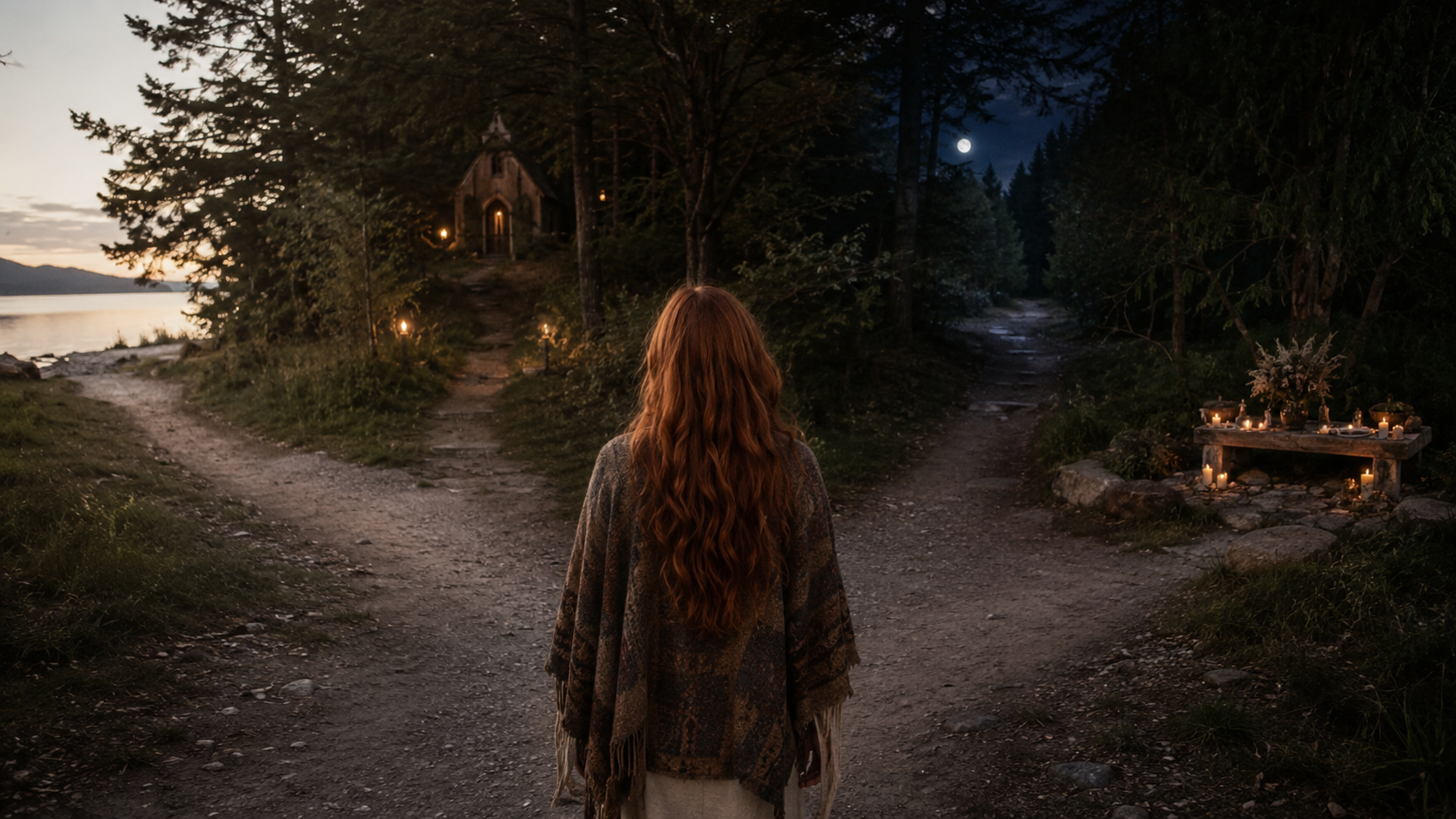
One way to understand the difference is to think of religion as a path that has already been marked, while spirituality is the way a person experiences the walk. The path may offer direction, community, and a sense of belonging, but each person still has their own relationship with what they discover along the way. Some people feel most at home on a clearly marked path, while others need room to explore, question, and form a more personal understanding.
Neither approach is automatically better than the other. Religion can be beautiful, grounding, and deeply healing when it is rooted in compassion and humility. Spirituality can be freeing, personal, and transformative when it remains grounded and honest. Both can also become unhealthy when fear, superiority, control, or ego begin to take over.
The real difference is not simply whether someone goes to church, uses crystals, prays, meditates, or performs rituals. It is whether the path helps them become more loving, aware, responsible, and connected. A meaningful spiritual or religious life should not be measured only by what someone believes, but by how those beliefs shape the way they treat themselves, other people, and the world around them.
When Sacred Paths Become a Competition

One of the saddest things about religion and spirituality is how easily people can turn to something sacred into a competition over who is right. Many traditions teach love, compassion, humility, forgiveness, service, and respect. Instead of allowing faith to soften the heart, some begin to use it as proof that they are more chosen, more enlightened, more protected, or more spiritually advanced than everyone else.
This does not mean that people should not feel devoted to their beliefs. It is natural to trust the path that has brought you comfort, meaning, or healing. The problem begins when personal devotion becomes superiority. Loving your own religion or spiritual practice does not require you to disrespect someone else’s. Feeling certain about your beliefs does not give you the right to treat another person as foolish, immoral, lost, or less worthy because their understanding of the sacred is different from yours.
Human beings have always tried to understand the mysteries of life, death, creation, suffering, purpose, and the Divine. Different cultures developed different names, stories, rituals, symbols, and teachings as they searched for meaning. Those differences do not always have to be threatening. They can remind us that humanity has spent generations reaching toward something greater, even when the language and tradition surrounding that search are not the same.
It is painful to see religions claim that they alone hold the entire truth while dismissing every other path as wrong. It is equally painful when spiritual people mock religion or assume they are more awakened because they no longer belong to an organized faith. Superiority can appear anywhere. It can wear the clothing of religion, witchcraft, healing, enlightenment, skepticism, or personal freedom. The ego is capable of entering any space, including spaces meant to help us move beyond it.
A belief system should be judged not only by what it claims, but also by what it produces in the people who follow it. Does it encourage compassion, honesty, responsibility, courage, and care for others? Does it help people face their own flaws, or does it give them permission to focus only on the flaws of everyone around them? Does it inspire humility, or does it create constant need to prove who is more righteous, pure, powerful, or spiritually advanced?
When a path is used to shame, control, frighten, or dehumanize others, it has moved away from the qualities most people associate with the sacred. No amount of scripture, ritual, prayer, or spiritual knowledge can excuse cruelty. A person may speak beautifully about God, energy, love, or awakening, but those words mean very little if their beliefs continually lead them to judge, exclude, or harm others.
True spiritual maturity does not require us to pretend that every belief is identical or that harmful ideas should never be questioned. We can disagree, set boundaries, and speak honestly about teachings that cause damage. Respect does not mean silence, and acceptance does not mean abandoning discernment. It means remembering that disagreement does not have to become hatred and that another person’s humanity does not disappear simply because their beliefs differ from our own.
The sacred is far too vast to fit neatly inside one human understanding. None of us sees the entire picture, no matter how certain we may feel. Our traditions, experiences, and beliefs may give us meaningful pieces of it, but humility reminds us that there may always be more to learn. A healthy spiritual path should make us more willing to listen, more careful with our judgements, and more aware of how little any one person can fully know.
Perhaps the better question is not, “Which path makes me right?” but, “What is this path teaching me to become?” If it is helping us become kinder, stronger, more honest, more compassionate, and more willing to take responsibility for ourselves, then it is serving something meaningful. If it only feeds pride, division, fear, or the need to feel above others, then it may be time to examine whether we are following the sacred or simply protecting our own ego.
Spirituality Can Save Us Through Many Different Paths

Spirituality does not save people in only one way. For some, healing begins inside a church, temple, mosque, or synagogue. For others, it begins in the woods, beside the ocean, at an altar, during mediation, in recovery, or in the quiet moment when they finally admit that they need their life to change. The setting may be different, but the deeper experience is often similar: a person finds meaning, connection, hope, and a reason to keep going.
This is why I do not believe one religion or practice owns the power of spiritual healing. A Christian may feel saved through prayer and a personal relationship with God. A Pagan may find healing through ritual, nature, seasonal cycles, and connection with deities or ancestors. A Buddhist may find peace through mindfulness and compassion. Someone with no religious label at all may begin to heal through meditation, journaling, sobriety, time in nature, or the belief that their life still has purpose. The language may differ, but spirituality can still meet each person where they are.
For me, spirituality became part of the path that helped me from depression and addiction to alcohol. It gave me something deeper to reach for when I felt disconnected from myself. It helped me believe that my life could become more than pain, numbness, and survival. It did not remove the need for effort, responsibility, support, or difficult choices, but it gave me rituals that mark change, practices that calm the mind, beliefs that support hope, and moments of reflection that make it harder to keep running from myself. It can remind us that recovery is not only about what we leave behind, but also about what we are creating in its place.
Depression can also make life feel empty and meaningless. It can convince us that nothing will change and that we have nothing left to offer. Spiritually cannot always silence those feelings, but it can create a small opening where hope can return. It may offer a sense that we are still connected to something beyond the darkness, even when we cannot fully feel it. Sometimes that small sense of connection is enough to help us take another step.
The spiritual path that saves one person may not speak to another, and that is okay. We do not all need the same prayers, symbols, rituals, or explanations. What matters is whether the path helps a person return to life in a healthier and more loving way. A healing spiritual practice should encourage honestly, responsibility, compassion, and respect. It should help us face our pain rather than hide from it, and it should support our growth rather than excuse harmful behavior.
It is also important to say that spirituality does not have to replace therapy, medical care, recovery programs, medication, or trusted support. Spirituality can be powerful, but healing is often the strongest when we allow different forms of care to work together. A person may pray and attend therapy, practice ritual and join a recovery group, meditate and take medication, or lean on both faith and community. Accepting practical help does not make someone less spiritual. It can be part of honoring the life they are trying to protect.
Spirituality saves through connection, not through labels. It saves when a person feels less alone, when they discover a reason to choose themselves, and when they begin to believe that change is possible. It saves through prayer, ritual, nature, recovery, love, discipline, community, and the quiet courage to begin again. The path may look different for each of us, but the sacred work of returning to ourselves is something many people understand.
Conclusion: The Sacred Does Not Belong to One Path

Spirituality is not always easy to define because it is not limited to one belief, one religion, or one type of practice. It is the personal relationship we build with meaning, healing, connection, purpose, and whatever we understand to be sacred. For some people, that relationship is found through organized religion. For others, it is found through nature, ritual, meditation, recovery, prayer, creativity, or quiet reflection. The outward form may change, but the desire beneath it is often the same: to feel connected to something deeper and to live with greater intention.
Religion can offer community, tradition, guidance, and a shared way of understanding the Divine. Spirituality can bring those teachings inward and make them personal. The two can exist beautifully together, but they do not have to. A person does not need to belong to a specific religion to have a meaningful spiritual life, just as a religious person should not have to abandon their tradition in order to explore a deeper relationship with the sacred.
What saddens me is how often people allow belief to become reason for division. Sacred teachings that speak of love, mercy, humility, and compassion are sometimes used to judge, shame, or exclude anyone who follows a different path. Spirituality is not supposed to become another way of proving that we are better than someone else. When the need to be right becomes more important than kindness, listening, and humanity, we lose sight of what the path was meant to teach us.
We may never agree on the name of the Divine, what happens after death, which practice are most meaningful, or how the universe came to be. Those questions have been explored by countless cultures and traditions throughout history, and perhaps some mysteries are larger than any one human explanation. We can remain devoted to our own beliefs without treating someone else’s path as worthless. We can honor what has saved us without claiming it is the only thing capable of saving another person.
For me, spirituality was not simply an interest or a collection of practices. It became part of the way I survived depression and addiction to alcohol. It helped me reconnect with hope, responsibility, purpose, and the person I wanted to become. It gave me a reason to keep choosing healing, even when healing was uncomfortable and slow. My path may not look like everyone else’s, but it does not need to. It brought me back to myself, and that is something I will always consider sacred.
Spirituality can save through many doors. It can reach someone through prayer, recovery, scripture, ritual, nature, meditation, community, or a moment of complete honestly with themselves. It may begin with a dramatic awakening, but it can also begin quietly, with a single choice to stop running, ask for help, or believe that life can still become something different.
The true value of a spiritual path is not found in how impressive it looks or how certain it makes us sound. It is found in the person we are becoming through it. Are we learning to be more compassionate, honest, responsible, and humble? Are we treating ourselves and others with greater care? Are we using our beliefs to heal, or are we using them to divide?
The sacred does not belong to one religion, one practice, one teacher, or one kind of person. It moves through many traditions, many languages, and many lives. We do not have to walk identical paths to recognize the same longing for healing, connection, love, and meaning in one another. Sometimes the most spiritual thing we can do is honor the path that brought us home while allowing others the freedom to find their own.
Reader question: Has spirituality or religion ever helped you bring back to yourself during a difficult season of your life?

Leave a Reply