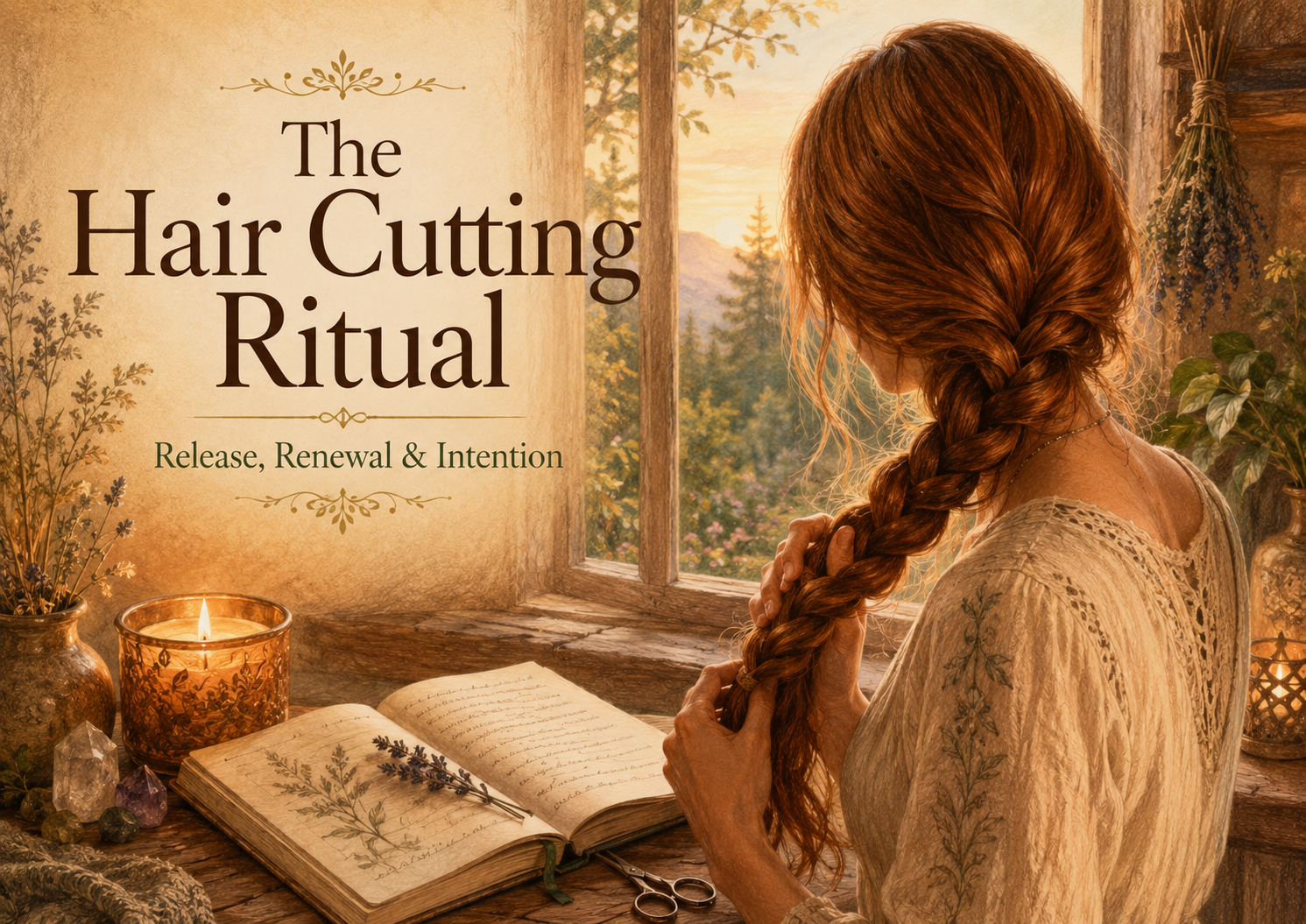
In May, beneath the light of the full flower moon, I decided it was time to cut my hair. Not because I had suddenly grown tired of it, and not because I was attempting one of those dramatic late-night transformations that usually ends with uneven bangs and immediate regret. This was something I had been thinking about for a while. I wanted the act of cutting my hair to mean something, I wanted it to become a moment of release, reflection, and intention rather than simply another trim.

Hair can feel deeply personal. It grows alongside us through difficult seasons, joyful moments, losses, lessons, and all the strange little chapters in between. We style it when we want to feel confident, hide behind it when we do not, change it when we are craving something new, and sometimes hold onto it long after a version of ourselves has begun to change. Whether or not we believe hair literally carries energy, it can still hold powerful memories and emotions because of everything we have lived while it was growing.
That was what made this ritual feel important to me. I was not trying to erase the past or pretend that a single snip of the scissors would magically solve every problem in my life. If only personal growth were that easy, salons would be much busier places. Instead, I wanted to create a physical symbol of an inner decision. I wanted to acknowledge what I had carried, thank the version of myself who had carried it, and intentionally make room for whatever was meant to come next.
A hair-cutting ritual can be performed for many reasons. It may mark the end of a difficult chapter, the beginning of a new journey, a period of healing, a personal awakening, or simply the quiet realization that something no longer feels like it belongs to you. The amount of hair removed does not come from how dramatic the haircut looks afterward. It comes from the meaning placed behind the act.
Although I chose to perform my ritual during a full moon, this practice does not belong to one specific lunar phase, belief system, or spiritual path. It can be adapted to fit the person performing it. There are no strict rules, no spiritual scorecards, and certainly no moonlit hair inspectors waiting to tell you that you did it wrong. Ritual is personal. It is shaped by intention, attention, and the willingness to be present with yourself.
In this article, I will walk through the symbolism behind ritual hair cutting, how to prepare yourself and your space, the ritual itself, and the different ways you may choose to handle the hair afterward. More importantly, I hope this guide encourages you to create a practice that feels sincere to you. Hair grows, changes, sheds, and begins again – and in many ways, so do we.
The Symbolism We Carry in Our Hair

Hair is one of those parts of us that can seem ordinary until we stop and think about how deeply connected it can become to our identity. It grows quietly in the background while life continues around us, carrying us through seasons we may later look back on with tenderness, grief, pride, or even disbelief. A certain length, color, or style can become tied to a version of ourselves, a relationship, a difficult year, a healing period, or a moment when we were trying to figure out who we are becoming.
For many people, changing their hair is one of the first outward signs that something is shifting internally. We cut it after heartbreak, dye it when we are craving change, grow it long when we are reclaiming something, or trim away damaged ends when we are ready to care for ourselves differently. Sometimes these choices are carefully planned, and sometimes they happen in front of the bathroom mirror with far too much confidence and a pair of scissors that should probably have stayed in the drawer. Either way, hair often becomes part of how we mark transition.
This is why cutting hair can carry so much symbolism within a ritual. The act creates a visible, physical moment of change. Something that was once attached to the body is released, and the person performing the ritual is left with a clear reminder that they made a choice. The cut itself does not erase memories, remove pain, or garuntee that everything will suddenly feel different. Instead, it offers a symbolic line between what came before and what is beginning now.
Hear can represent many different things depending on the person, their culture, their spiritual beliefs, and their life experience. It may be connected to:
- Personal identity and self-expression
- Strength, beauty, confidence, or femininity
- Grief, memory, and important life changes
- Spiritual growth and personal transformation
- Freedom, rebellion, or reclaiming control
- Protection, privacy, and the way we present ourselves to the world
- Renewal, especially when damaged or neglected hair is cut away
Not everyone feels spiritually connected to their hair, and that is perfectly fine. A ritual does not require someone to believe that hair literally stores energy or memories. The meaning may be entirely emotional and symbolic. What matters is that the action reflects something the person is ready to acknowledge, release, or welcome.
For me, the ritual was not about rejecting the person I had been. I did not want to treat the past as something ugly that needed to be cut away and forgotten. Every version of us has carried something, learned something, and helped us reach the point where we are now. Even the chapters we would never choose to repeat can leave behind wisdom, boundaries, and a clearer understanding of what we need.
That is an important part of this practice. Release does not always mean anger, destruction, or pretending something never happened. Sometimes release is simply recognizing that a chapter has served its purpose. It is thanking it for what it taught us, setting down what has become too heavy, and allowing ourselves to move forward without dragging every old version of ourselves along for the ride.
When hair is cut with intention, the moment can become a quiet conversation between who we were and who we are becoming. The scissors do not create the transfomation on their own. They simply give our hands something to do while our heart makes a decision.
Why Cut Your Hair With Intention?

There is a difference between cutting your hair because the ends need attention and cutting it because something inside you is asking for a change. Both are completely valid, of course, but when intention is added, the act can become more than routine self-care. It becomes a way of marking a decision that may have already been growing quietly beneath the surface.
A hair-cutting ritual can help bring something internal into the physical world. Thoughts, emotions, and personal turning points can sometimes feel difficult to define, especially when we know we are changing but cannot fully explain how. Cutting the hair gives that change a visible form. It creates a moment we can look back on and remember as the point when we chose to release, renew, or move forward.
People may feel called to perform this ritual for many different reasons. Some may be closing the door on a painful chapter, while others may simply feel ready to welcome a new version of themselves. The ritual may be connected to:
- Releasing grief, heartbreak, fear, or emotional heaviness
- Marking the end of a relationship, habit, or difficult season
- Reclaiming confidence or a sense of personal identity
- Honoring healing, sobriety, spiritual growth, or personal progress
- Letting go of an outdated version of the self
- Welcoming renewal, courage, creativity, or fresh direction
- Creating a physical reminder of a promise made to oneself
The ritual does not need to begin with something dramatic. You do not need to be standing at the edge of a major life transformation with thunder in the distance and a raven watching from a nearby branch. Sometimes the reason is much quieter. You may simply feel stagnant, disconnected, or ready to care for yourself with more intention. Small shifts can be just as meaningful as life-changing ones.
It is also important to understand that the haircut itself is not the source of the transformation. Cutting a few inches will not instantly heal grief, remove the anxiety, or undo everything that has happened. Ritual is not a shortcut that works by giving us a focused moment to acknowledge what we feel and decide how we want to move forward.
That distinction matters because release does not always happen all at once. We may perform a ritual and still feel sadness the next morning. We may cut our hair and continue working through the same fear, memory, or uncertainty. This does not mean the ritual failed. It simply means we are human, and healing rarely follows a perfectly straight path.
The intention behind the cut may be as simple as, “I am ready to stop carrying this in the same way,” or, “I am choosing to begin again with more care for myself.” The words do not need to sound poetic or mysterious. They only need to be honest. A clumsy but heartfelt intention will always carry more meaning than a beautiful phrase that does not feel true.
Cutting your hair with intention can become an act of self-recognition. It is a way of pausing long enough to say, “I see what I have survived. I see how I have changed. I see what I am ready to leave behind.” The physical cut may be small, but the decision it represents can be much larger.
Choosing the Right Time for the Ritual

Because I performed my hair-cutting ritual beneath the full moon, it naturally became part of the meaning behind the experience. The full moon is often associated with illumination, culmination, release, and seeing clearly what has reached the end of its cycle. It felt like an appropriate time to pause, reflect on what I had been carrying, and intentionally let some of it go.
That being said, there is no single correct time to perform this ritual. You do not need to wait for a specific moon phase, planetary alignment, seasonal celebration, or perfectly dramatic evening when the wind suddenly begins moving through the trees. A meaningful ritual can happen on an ordinary Tuesday if that is the moment when you finally feel ready.
The timing should support the purpose behind the ritual. If you are using it as an act of release, you may feel drawn to the full moon or waning moon. If you are focused more on growth, renewal, or beginning a new chapter, the new moon may feel more fitting. Some people may choose a birthday, anniversary, seasonal transition, or another date that holds personal meaning. Others may not follow lunar timing at all.
A hair-cutting ritual may feel appropriate during:
- A full moon, for reflection, completion, and release
- A waning moon, for letting go and reducing what feels heavy
- A new moon, for renewal, fresh intentions, and new beginnings
- A birthday, anniversary, or personal milestone
- The end of a relationship, job, habit, or difficult season
- A period of recovery, healing, sobriety, or spiritual growth
- A seasonal shift, especially when life already feels like it is changing
- Any private moment when you feel calm, prepared, and certain
The most important part of choosing the time is making sure the decision is intentional rather than impulsive. Strong emotion can make us want to create immediate change, especially after heartbreak, conflict, grief, or frustration. There is nothing wrong with wanting to mark a powerful moment, but it is word giving yourself enough time to decide how much hair you genuinely want to remove.
If you are unsure, start small. A ritual does not become more powerful simply because more hair ends up on the floor. You can trim the ends, cut one hidden strand, or remove only a small section. The symbolism remains meaningful because the purpose of the ritual is not to shock yourself when you look in the mirror afterward.
You may also want to choose a time when you will not feel rushed or interrupted. Give yourself enough space to prepare, reflect, cut carefully, and sit with the experience afterward. This is especially helpful if you plan to journal, light candles, work with herbs, or include other personal elements. A ritual feels very different when you are fully present than when you are checking the clock because you have somehwere to be in twenty minutes.
Ultimately, the right time is the time that feels honest. The moon, season, and date can add another layer of symbolism, but they are not what make the ritual sacred. Your attention, your readiness, and the meaning behind the act are what turn a simple haircut into a moment of release, renewal, and intention.
What You Will Need
One of the best things about a hair-cutting ritual is that it can be as simple or as detailed as you want it to be. You do not need a perfectly arranged altar, a collection of expensive tools, or enough candles to alarm the local fire department. The ritual can still be meaningful with only a pair of proper hair-cutting scissors, a quiet moment, and a clear intention.
That said, gathering a few thoughtful items beforehand can help create a sense of ceremony and make the experience feel separate from an ordinary trim. The goal is not to collect things simply for the sake of appearance. Each item should support the purpose of the ritual or help you feel calm, focused, and present.
You may choose to gather:

- Hair-cutting scissors
- A mirror
- A brush or wide-tooth comb
- Hair ties, clips, or sectioning tools
- A candle
- A journal and pen
- A bowl, cloth, envelope, or small container for the cut hair
- Herbs, flowers, crystals, incense, or other meaningful objects
- A towel or cape to protect your clothing
- A small amount of hair oil or another care product for afterward
The most important practical item is clean, sharp pair of scissors meant for cutting hair. Household scissors can pull, bend, or damage the ends, especially if you are cutting more than a very small piece. Using the proper tool is not particularly mystical, but neither is accidentally sawing through your hair with scissors from the junk drawer.
A mirror is also helpful, even if you are only trimming a small amount. If you plan to cut more than a hidden strand for a few ends, it may be wise to have another person help you or visit a professional stylist. The ritual can still remain personal and intentional even when someone else performs the actual cut. You can prepare your intention beforehand, save a small section of hair, and complete the reflective portion of the ritual at home.
A candle may help mark the beginning of the ritual and create a calm atmosphere. You may choose a color based on your intention, but there is no need to overcomplicate it. White can be used for clarity and renewal, black for release and protection, green for growth, or pink for self-love. The candle is optional, and battery-operated candles are perfectly acceptable if open flames are not safe in your space.
A journal can be especially useful because it gives you somewhere to place the thoughts that arise before and after the cut. You may want to write down what you are releasing, what you are honoring, and what you hope to grow in its place. This does not need to become a beautifully written page of spiritual wisdom. A few honest sentences, crossed-out words, and tear stains are still a valid ritual record.
The bowl, cloth, envelope, or container is simply meant to hold the hair until you decide what to do with it. This can prevent loose strands from ending up everywhere and save you from the very unceremonious experience of trying to peel them off the bathroom sink afterward. If you plan to use the hair in another part of the ritual, choose a container that feels appropriate and easy to handle.
Optional items such as herbs, crystals, incense, or flowers can be chosen according to the intention behind the ritual. Rosemary may represent remembrance and protection, lavender may support calm and healing, and rose peals may reflect love or self-compassion. Clear quartz, moonstone, smoky quartz, or any personally meaningful stone can also be included. These objects do not create the power of the ritual, but they may help you connect more deeply with what you are trying to express.
Before beginning, place everything within easy reach so you do not have to interrupt the moment halfway through. There is nothing quite like entering a peaceful, reflective state and then realizing the scissors are in another room. A little preparation allows you to remain present and move through the ritual at your own pace.
In the end, the only true necessities are safety, intention, and your willingness to be honest with yourself. Everything else is there to support the experience, not to determine whether you are doing it correctly.
Preparing Yourself and Your Space

Before beginning to ritual, take a little time to prepare both yourself and the space around you. This does not mean the room needs to be spotless or arranged like a photograph from a perfectly curated spiritual magazine. Life happens, laundry exists, and sometimes the most sacred moments take place in an ordinary bathroom with questionable lighting. What matters is creating enough calm and order that you can be fully present with what you are about to do.
Start by choosing a space where you feel comfortable and are unlikely to be interrupted. You may want to tidy the area, wipe down the surface in front of you, dim the lights, or open a window for fresh air. If you are using candles, incense, herbs, crystals, or music, arrange them in a way that feels natural rather than overly staged. The goal is to create an environment that helps you slow down, not one that makes you worried about whether everything looks spiritual enough.
You may also choose to cleanse the space in whatever way fits your beliefs and home. This could include burning incense, ringing a bell, opening a window, sweeping the floor, saying a short prayer, or simply taking a few deep breaths while imagining the room becoming calmer and lighter. Cleansing does not need to be dramatic. Sometimes physically clearing the counter and turning off your phone is enough to shift the energy of the moment.
Preparing your hair is equally important. Make sure it is clean, dry, brushed, and free from tangles unless the cutting method you are using requires otherwise. Dry hair is often easier to judge because wet hair can appear longer and may shrink as it dries. If you are planning to remove more than a small strand or light trim, consider researching the proper cutting technique beforehand or asking a trusted stylist for help. Intention is important, but so is avoiding a haircut that requires several weeks of creative hat choices.
Once the practical preparation is complete, take a few moments to sit quietly with yourself. Place your feet on the floor, relax your shoulders, unclench your jaw, breathe slowly. You may place one hand over your heart and the other over your hair. Notice how you feel without trying to force yourself into a particular emotional state. You may feel peaceful, nervous, emotional, excited, or a slightly confusing combination of all four. Whatever comes up is allowed to be there.
Before picking up the scissors, think carefully what this ritual represents for you. You may want to ask yourself:
- What am I ready to release?
- What chapter of my life am I acknowledging?
- What have I learned from the person I have been?
- What do I want to carry forward?
- What would I like to nurture as my hair grows again?
- Am I making this choice from clarity or from temporary burst of emotion?
Writing your answers in a journal can help you find the true intention beneath the ritual. Try to be specific, but do not pressure yourself to create the perfect statement. You may be releasing a habit, an old belief, resentment, fear, shame, grief, or the need to remain connected to a version of yourself that no longer feels true. You might also be honoring how far you have come and choosing to step into the next chapter with greater confidence.
It is important to prepare yourself emotionally as well as spiritually. Cutting your hair can stir up unexpected feelings, especially if it has been long for many years or is connected to your identity. Give yourself permission to pause if you begin to feel uncertain. There is no rule saying you must continue simply because you lit the candle and gathered the supplies. A ritual performed reluctantly will not become more meaningful because you forced yourself through it.
Decide exactly how much hair you plan to remove before beginning. You may want to mark the section with a hair tie, clip, or your fingers. If you are feeling unsure, choose less than you originally considered. You can always cut more later, but hair has yet to master the art of reattaching itself once it lands in the bowl.
When you feel ready, take one final grounding breath and state your intention aloud or silently. This may be something simple such as, “I am ready to release what I no longer need,” or, “I honor where I have been and welcome who I am becoming.” Saying the words helps mark the transition from preparation into ritual. From this point forward, each action can be performed slowly and with awareness.
Preparing the space is ultimately about preparing your mind. The candle, music, crystals, and carefully arranged tools can help create the atmosphere, but your presence is what gives the moment meaning. By slowing down before the cut, you allow the ritual to become an act of conscious release rather than an impulsive change.
The Hair Cutting Ritual

Once your space is prepared and your intention feels clear, you are ready to begin the ritual itself. Take your time with this part. There is no prize for moving quickly, and this is definitely not the moment to suddenly decide you are a professional hairstylist because you watched two videos and felt inspired. The purpose is not perfection. It is presence.
Begin by sitting or standing comfortable in front of your mirror. Take a few slow breaths and allow yourself to settle into the moment. Notice the weight of your hair, the way it falls, and the emotions that come up as you prepare to cut it. This may feel peaceful, emotional, empowering, or slightly nerve-racking. All of those feelings can exist at the same time.
Before touching the scissors, place your hands gently over your hair. You may hold the ends, gather a small section, or simply run your fingers through it. Think about everything this hair has grown through with you. Consider the seasons, memories, losses, changes, lessons, and moments of strength that have taken place during that time.
You do not need to view the past as something negative in order to release it. Some chapters are painful, while others are beautiful but complete. The purpose of this ritual is not to reject who you were. It is to honor that version of yourself while recognizing that you are allowed to change.
When you feel ready, speak your intention aloud or silently. You may use your own words or begin with something like:
I honor the person I have been and everything I have carried. I release what no longer belongs with me, and I make room for healing, growth, and renewal.
Pause after saying the words. Let them settle before moving forward. There is no need to rush past this part just because you are holding scissors and feeling dramatic beneath the moonlight.
Next, separate the section of hair you plant to cut. If you are removing only a small symbolic strand, choose a place where the cut will not affect the overall shape of your hair. If you are trimming the ends, section the hair carefully and make sure you are confident in the amount you intend to remove.
Hold the section gently between your fingers. Before cutting, you may want to name what you are releasing. This can be one specific thing or several emotions, habits, fears, or attachments that have become too heavy to continue carrying in the same way.
You might say:
- I release the fear that keeps me small.
- I release the belief that I must remain who I used to be.
- I release the guilt, shame, or resentment I have carried.
- I release the need to control what is no longer mine to control.
- I release the version of myself that survived by staying silent.
- I release this chapter with gratitude for what it taught me.
Try to choose words that feel true rather than overly polished. You are not auditioning for the role of mysterious forest oracle. A simple and honest sentence is enough.
When you are ready, take one slow breath in. As you exhale, make the cut.
Allow the hair to fall into the bowl, cloth, or container you prepared. Pause and observe how you feel. The moment may be emotional, or it may feel surprisingly ordinary. You may feel lighter, tearful, relieved, uncertain, or even amused that such a small pile of hair can suddenly seem so significant.
Do not judge your reaction. Rituals do not always arrive with chills, visions, or dramatic spiritual music playing in the background. Sometimes the power of the moment is quiet. Sometimes it is understood later.
After the first cut, you may continue trimming the amount you planned to remove. Work slowly and carefully. With each section, you can repeat your intention or name something different that you are ready to release. You may also perform the remaining cuts in silence, allowing the physical action to carry the meaning.
Once the cutting is complete, set the scissors down. Take a moment to look at yourself in the mirror. Try not to immediately inspect every strand for perfect symmetry or decide that one side is suddenly three feet longer than the other. First, simply notice yourself.
Place your hands over your heart or gently touch the ends of your hair. Acknowledge the change you have made and the intention behind it. You may say:
What I have released no longer defines me. I carry forward the wisdom, strength, and love that remain. As my hair grows, may I continue to grow with it.
This is also a good time to shift your attention from release to renewal. Letting go creates space, but it is helpful to divide what you want to nurture in that space. Consider the qualities, feelings, or experiences you want to invite into the next chapter of your life.

You may choose to welcome:
- Peace and emotional clarity
- Courage and self-trust
- Healing and patience
- Creativity and inspiration
- Confidence and personal freedom
- Healthier boundaries
- A deeper connection with yourself
- Growth that feels steady rather than rushed.
Speak these intentions in your own words. You may say, “I welcome peace where fear once lived.” or, “I choose to grow with greater trust in myself.” This helps the ritual become more than an act of removal. It becomes a conscious decision about what comes next.
If you lit a candle, sit with its flame for a few moments before closing the ritual. You may journal, meditate, offer a prayer, or simply breathe quietly. Look at the hair you have cut and acknowledge that it represents something you were ready to place outside of yourself.
To close the ritual, thank yourself for showing up honestly. You may also thank the moon, your spiritual guides, the natural world, your ancestors, a deity, or any presence you invited into the space. If your practice is not connected to any spiritual beings, you can simply express gratitude for the moment and for your own ability to choose change.
A closing statement might be:
This chapter is honored, this release is complete, and this new beginning is mine to shape. I move forward with intention, knowing that growth will come in its own time.
Extinguish the candle safely, but leave the hair in its container until you decide what you would like to do with it. Do not feel pressured to dispose of it immediately. You may need time to reflect before choosing how to complete that part of the ritual.
The cut itself may only take a few seconds, but the meaning behind it can remain with you much longer. Each time you touch your hair, style it, or notice the new length, it can serve as a reminder of the promise you made to yourself. You chose to release something, you created room for renewal, and you allowed a simple act of self-care to become a sacred moment of transformation.
What to Do With the Hair Afterward

Once the ritual is complete, you may find yourself staring at the cut hair and wondering what comes next. This part can feel surprisingly important because the hair has become more than something swept from the floor. It now represents what you released, what you honored, and the intention you placed into the ritual.
There is no single correct way to handle it. Some people may feel called to keep a small portion, while others may want to dispose of it as part of the release. The choice should reflect the meaning of your ritual and what feels most natural to you. You do not need to force a dramatic ending simply because it seems more spiritual.
If your intention centered on remembrance, healing, or honoring a former version of yourself, keeping a small strand may feel appropriate. You could place it in an envelope, tuck it inside your journal, add it to a memory box, or keep it with the written intention from the ritual. This does not mean you are refusing to let go. Sometimes preserving a small piece is simply a way of honoring how far you have come.
You may also choose to place the hair with a bay leaf or another meaningful natural item. Write a word or short intention on the leaf, such as “release,” “renewal,” “courage,” or “peace,” and wrap the strand of hair around it or place them together in a small envelope. This can become a personal token of the ritual or be used as part of a later release practice.
If the purpose of the ritual was to let something go completely, throwing the hair away may be the most fitting choice. This may sound ordinary, but it can still be deeply intentional. You can hold the hair one final time, acknowledge what it represents, and place it in the trash while stating that the release is complete.
Spiritual meaning does not disappear simply because something ends up in a garbage bag. The universe is unlikely to revoke your ritual privileges because you chose the practical option.
Some people may feel drawn to burn the hair as a symbolic act of transformation. Hair burns very quickly, smells unpleasant, and can flare unexpectedly, so this should only be done outdoors or in a properly ventilated area using a fireproof container. It is also important to follow local fire laws and avoid burning anything dry or unsafe conditions.
If you choose this method, you may speak a final release statement as the hair burns, such as:
I return what I have released to the elements, what has ended be transformed, and may I carry only the wisdom forward.
Burying the hair is another option, particularly if your ritual focused on renewal, grounding, or returning something to the earth. Hair breaks down slowly, so it is best to bury only a small amount and avoid leaving it exposed where wildlife could become tangled in it. Choose a place where you have permission to dig and where the act will not disturb land or other people’s property.
You might bury it beneath a tree, near a favorite plant, or in a private garden space. As you cover it with soil, you can imagine the old chapter being returned to the earth while your new intentions take root.
Hair may also be incorporated into personal spiritual work, such as a charm, spell jar, sachet, or protective bundle. Because hair is closely connected to the individual, it is often viewed as a powerful personal link in folk magic and spiritual practice. For that reason, it should be stored carefully and used only in ways that feel respectful and safe.
Possible ways to complete the ritual include:
- Keeping a small strand in a journal or memory box
- Placing it with a written intention or bay leaf
- Adding it to a personal charm or spell jar
- Burning it safely as an act of transformation
- Burying a small amount as a symbol of grounding and renewal
- Throwing it away intentionally to complete the release
- Keeping part and releasing the rest
- The Wild Self Ritual
Privacy may also matter, especially if your spiritual beliefs view hair as carrying a personal energetic connection, You may not feel comfortable leaving it outside, placing it in a shared space, or allowing another person to handle it. Trust your instincts and choose a method that leaves you feeling settled rather than uneasy.
You also do not need to decide immediately. The hair can remain in its container for a few days while you reflect on the ritual. Sometimes the right ending becomes clearer after the emotions of the moment have settled. Just keep it somewhere safe, dry, and unlikely to be mistaken for a very concerning household discovery.
Whatever method you choose, approach it with the same intention you brought to the cut. The hair does not need an elaborate farewell, but it deserves a conscious one. Whether it is kept, buried, burned, or quietly thrown away, the final act helps bring the ritual to a close and reminds you that release can take many forms.
Hair Grows, and So Do We

A hair-cutting ritual may look simple from the outside. It is, after all, just a pair of scissors, a small amount of hair, and a quiet moment set aside for yourself. But when approached with intention, that simple act can become a meaningful way to acknowledge change, honor what you have lived through, and create space for what comes next.
The ritual does not erase the past, nor should it. The chapters behind us helped shape the person standing in front of the mirror today. Some taught us how strong we are, some showed us what we no longer want, and others left lessons we may still be learning how to understand. Releasing something does not mean pretending it never mattered. Sometimes it means accepting that it mattered deeply, but no longer needs to be carried in the same way.
That was one of the most important parts of this ritual for me. I was not cutting away a version of myself because she was unworthy or because I wanted to forget her. I was honoring the person I had even while recognizing that I had changed. The hair I removed had grown alongside me through memories, difficult moments, healing, and personal growth. Cutting it became a way of saying thank you, goodbye, and I am ready – all at once.
There is something beautifully symbolic about choosing hair for a ritual of renewal. Hair does not stop growing because part of it has been cut away. It begins again from where it is, slowly and steadily, without rushing or questioning whether it is doing enough. It simply continues. There is a lesson in that. We do not need to become entirely new people overnight. Growth can happen quietly, one choice and one small act of care at a time.
Your ritual may feel emotional and powerful, or it may feel calm and surprisingly ordinary. You may notice an immediate sense of relief, or the meaning may reveal itself gradually in the days that follow. There is no correct emotional response and no sign that proves the ritual worked. Its value comes from the honesty you brought to it and the promise you made for yourself in that moment.
As your hair grows, let it become a gentle reminder of what you chose to nurture. Let each new inch represent patience, healing, courage, self-trust, or whatever intention you placed behind the cut. There may still be difficult days, old feelings, and moments when growth seems painfully slow. That does not mean you have gone backward. Hair grows unevenly, life unfolds unpredictably, and neither process is required to look perfect to be real.
The Hair Cutting Ritual is not about becoming someone else. It is about meeting yourself where you are, honoring where you have been, and deciding how you want to move forward. Whether you cut several inches, trim the ends, or remove only one small strand, the outward change can become a symbol of something much deeper.
Hair grows, seasons turn, and we continue becoming. Sometimes all we need is a quiet moment, a clear intention, and one brave little snip to remind ourselves that we are allowed to begin again.

Leave a Reply